
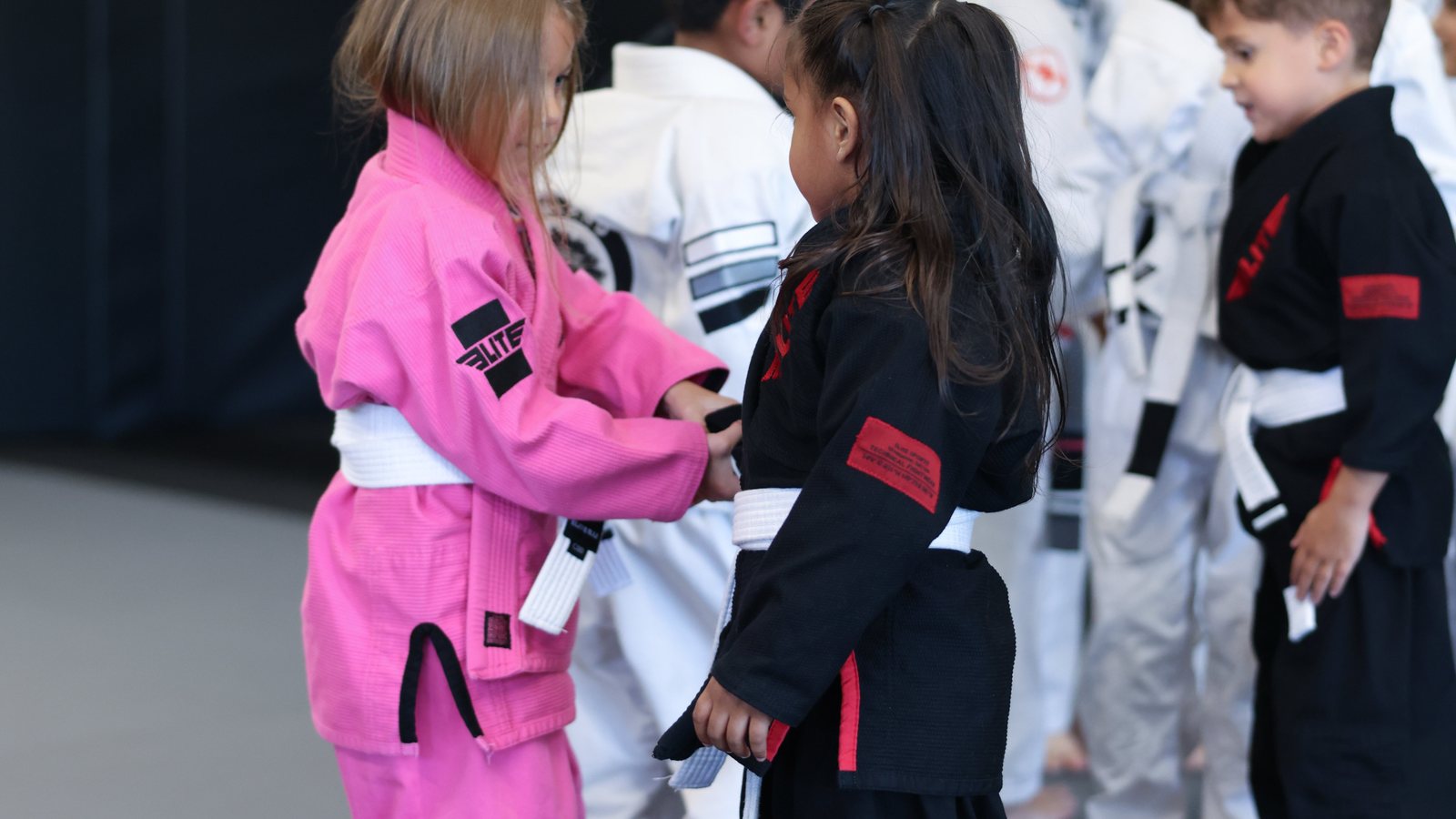
If you've spent any time watching your kid on the mats, you've probably wondered whether you should try Jiu Jitsu too. Most parents hold back because they feel like the moment has passed — they're "too old," "too out of shape," "not built for it," or worried about embarrassing themselves in front of others, or even their own kids.
The truth? It's never too late to learn Jiu Jitsu.
And ironically, many of the reasons you hesitate are the exact reasons to start. When you train, you're modeling the lessons you want your kids to learn: showing up, doing hard things, overcoming obstacles, and not quitting when something gets uncomfortable. Starting as an adult, especially as a parent, gives you a perspective your kids will never forget.
Understanding What Your Kids Experience
The moment you begin training, you realize something important: Jiu Jitsu is hard, and that's exactly why it's good for you.
Kids deal with the same challenges adults do:
Feeling uncomfortable
Learning how to lose
Getting frustrated
Being confused by new techniques
Getting tired and wanting to quit
When you train, you finally feel what they feel. Their struggles, their nerves, their victories — it all becomes more clear, and that connection strengthens your relationship in a meaningful way.
Why Adults Love Starting Jiu Jitsu Later in Life
Adults who decide to start, and stick with it, almost always say: "I really wish I started earlier… but I'm so glad I started."
Jiu Jitsu gives you far more than a workout:
A new level of confidence and purpose
Better fitness without the monotony of a gym
Real stress relief
A mindset that carries into parenting, work, and life
Community — genuine friendships built through shared struggle
And yes, it's uncomfortable. But discomfort is where all the growth and the rewards happen.
The First Few Months: What to Expect
1. You won't know what's going on.
Totally normal. Everyone feels lost at first. Jiu Jitsu starts making sense very slowly, then suddenly tiny things feel easier. Eventually you won't believe you ever struggled with them.
2. Everything feels awkward.
The warm-ups, the movements, the positions — all of it. You'll think you look funny. You'll think everyone is watching you.
But here's the truth: every single person in that room has felt the exact same way, including the black belts. Every person you see was a white belt once. Every "best in the room" had a first class, a first awkward drill, a first moment where they wondered if they belonged.
You're not alone. You're simply at the beginning of the same path everyone else walked to get better.
3. You'll get tired fast.
Your cardio improves quickly. Take breaks when you need them. Many adults see huge changes in conditioning, weight loss, and their overall lifestyle — without even realizing they're doing one of the greatest workouts possible.
4. You'll have moments where you think, "Why am I doing this?"
Everyone hits this point. Keep going. The turning point usually arrives around month three, and this is where your kids get to see your resilience in action.
5. You'll rarely feel like training, but you'll always be glad you did.
That "I'll just go tomorrow" voice is universal. Ignore it. Just show up. Eventually it becomes a habit and part of your life.
6. You'll leave many classes feeling humbled.
This is where the real transformation happens. Jiu Jitsu is a mirror, showing you areas to grow, mentally and physically.
7. You'll start noticing small wins.
An escape makes sense. A technique clicks. A newer student asks you for help. These small breakthroughs add up fast, and they are addictive.
How to Overcome Early Barriers
A few simple habits make all the difference:
Never compare yourself to others, especially younger athletes.
Train twice a week consistently. Frequency beats intensity.
Don't chase promotions, chase knowledge. Stick with it and you'll get your black belt someday.
Ask questions. Coaches love helping curious adults.
Tap early and tap often. You're learning, not trying to "win at all costs."
Celebrate small progress. Try to learn one tiny thing per class — it compounds quickly.
Don't feel pressured to roll at first; choose experienced partners when you do.
Most importantly: give yourself permission to enjoy being a beginner.
Training Brings Parents and Kids Closer
When your kids see you trying something difficult — something they also struggle with — the dynamic changes in a powerful way.
You show them:
Adults can learn new things too.
It's okay to struggle.
Failing forward is normal.
Growth takes time and courage.
There's something special about sharing the same art, learning the same movements, and cheering each other on. Kids love saying, "My dad does Jiu Jitsu too." It becomes a shared journey — something you'll talk about, laugh about, and look back on forever.
So… Should You Try It?
If the thought has crossed your mind even once, the answer is probably yes. Not because it's easy. Not because you'll be good right away. But because Jiu Jitsu changes people, at any age.
It may be one of the hardest, most humbling, most uncomfortable things you've ever tried — and that's exactly why it becomes one of the most rewarding and life-changing experiences you'll ever have.
Step onto the mats. Your kids will be proud of you, and in time you might be surprised by what you're capable of.